Key Takeaways
- B2B ChatGPT visibility starts with a simple fact: ChatGPT actively performs live web searches to answer many buyer questions, meaning it is reading company websites right now when buyers ask about vendors in your category.
- Only 31.3% of websites use any schema markup, and AI engines cannot identify, verify, or cite companies that lack it, no matter how strong the content is.
- Product pages built around brand language rather than buyer questions are the most common and most fixable reason ChatGPT cannot extract a citation from your site.
- A misconfigured robots.txt or missing llms.txt file can block AI crawlers entirely without the founder ever knowing, making every other optimization irrelevant.
- FAQ content is the highest-leverage addition a B2B company can make for AI citation probability because it directly mirrors how buyers phrase queries in ChatGPT.
Why Most Companies Lose B2B ChatGPT Visibility
A buyer in your category just opened ChatGPT and typed the kind of product you sell. ChatGPT searched the web, synthesized the results, and named two or three companies in its answer. Yours was not one of them.
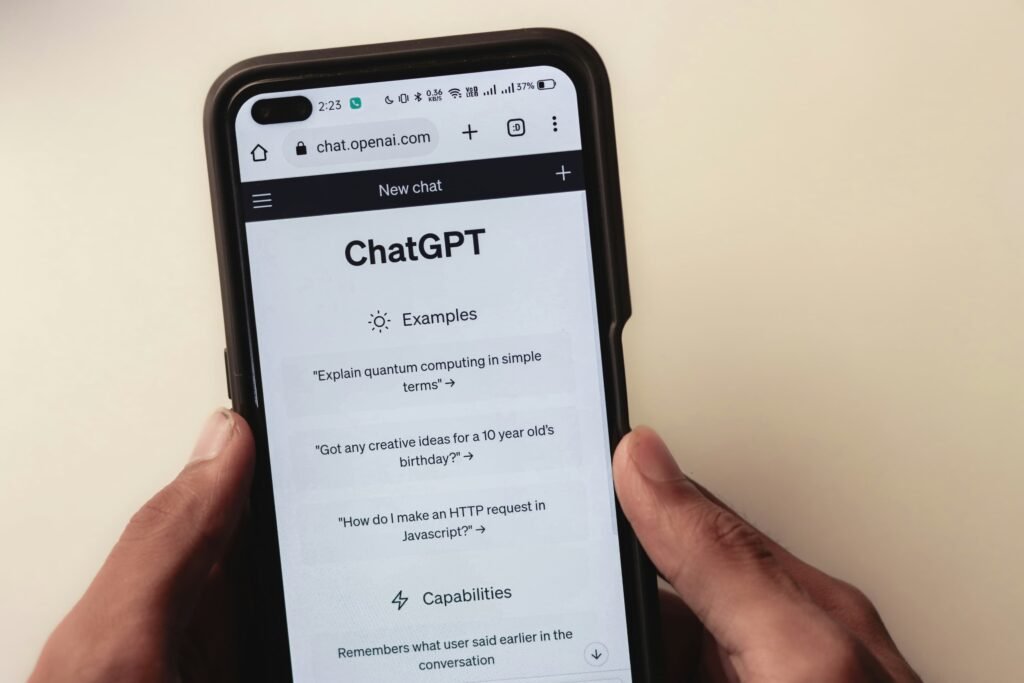
This is not random, and it is not a matter of reputation or ad spend. B2B ChatGPT visibility depends on a specific set of structural signals that most B2B websites were never built to provide. ChatGPT actively performs live web searches to answer many buyer questions, which means it is reading company websites right now when buyers ask about vendors in your category.
There are five reasons your company is not showing up. Each one is diagnosable and fixable. The companies your buyers are being sent to right now almost certainly do not have all five solved either, which means the competitive window is still open.
31.3%
of websites implement any schema markup, according to 2026 analysis, meaning the overwhelming majority of B2B companies are structurally invisible to AI search engines regardless of their content quality.
Reasons 1 and 2: What You Say and How You Say It
Reason 1: Your product pages answer the wrong question.
ChatGPT is trying to answer a specific buyer question: who offers this kind of product, what does it do, and is this company worth trusting? Your product pages were probably written to answer a different question: what is the vision of this company, and why should buyers feel excited about the brand?
Brand language does not generate AI citations. ‘Empower your team’s potential’ gives ChatGPT nothing to extract. ‘Our platform integrates with Salesforce and HubSpot, starts at $49 per seat per month, and is built by a team with nine years in the space’ gives ChatGPT a citable, verifiable fact. The shift from impression to information is the single most impactful change most B2B companies can make, and it starts with how you structure each product page.
Reason 2: You have no schema markup.
Schema markup is machine-readable code that tells AI crawlers exactly what your company is, what it offers, and what makes it credible. Without it, your website is text on a page. With it, you are a structured data source the AI can confidently extract and cite. 2026 AI SEO research confirms that structured data remains one of the highest-leverage signals for AI citation eligibility across every major platform.
ChatGPT does not reward the most popular company in your category. It rewards the one that made itself the easiest to read, verify, and cite.
Fixing both of these issues starts with a single product page audit. Read your top three product pages as if you were an AI trying to extract a factual answer about that product. If you cannot find the price range, the integrations, the onboarding time, and the expected outcome within the first two paragraphs, neither can ChatGPT.
Reasons 3 and 4: What ChatGPT Checks Outside Your Site
Reason 3: Your external validation is too thin.
ChatGPT does not rely solely on your website. Its citation decisions are shaped by what has been written about your company across the web. G2 review volume and recency, Capterra listings, industry press mentions, and citations from trade publications all function as trust signals. A company with a handful of reviews and no directory presence is a thin source. A company with a substantial, recent review base, a complete G2 profile, and a mention in an industry publication is a validated source the AI can recommend with confidence.
The benchmark worth targeting is an active, complete profile with strong recent reviews on the one or two directories most relevant to your category, and at least one external citation from a publication or platform the AI recognizes as authoritative.
Check whether your company appears on the platforms ChatGPT cites most often for B2B software: G2 and Capterra. If your profile on either of these is incomplete, unclaimed, or missing entirely, that is a validation gap the AI will notice even if your website is perfectly optimized.
Reason 4: AI crawlers cannot access your site.
This is the most common silent killer of AI visibility, and most founders never know it is happening. If your robots.txt file blocks AI crawlers, or if you have not created an llms.txt file to guide them, the AI may be unable to read your content at all, making every other optimization irrelevant.
Robots.txt files that contain broad blocking rules will prevent ChatGPT’s browsing system from indexing your pages. An llms.txt file does the opposite: it tells AI models exactly what content on your site is available, relevant, and safe to cite. Most B2B companies do not have one, and the ones that do rarely have it structured in a way that maximizes citation eligibility.
A free AI visibility audit shows you which of these five gaps your company has and what it will take to close each one. It takes 30 minutes and gives you a clear, prioritized picture of where to focus first. Already know you have a gap? Use our ROI Calculator to see what closing it is worth in monthly pipeline.
Reason 5 and What to Do About All of Them
Reason 5: You have no FAQ content.
FAQ pages are the format AI engines extract and cite most reliably. When a buyer asks ChatGPT ‘does this integrate with Salesforce’ or ‘what should I look for in a project management tool,’ it is looking for a clear, direct answer. A page that has those questions written out explicitly, with specific answers, is a page ChatGPT can cite directly.
Most B2B companies do not have FAQ content. The ones that do typically have three or four generic questions buried at the bottom of a pricing page. What ChatGPT rewards is a dedicated FAQ section for each use case you serve, written in the exact language buyers use when asking the question, with answers specific enough to be extracted as a standalone citation.
Taken together, these five gaps form a predictable pattern. None of them are difficult to fix individually. The challenge for most founders is knowing which ones exist on their site and in what order to address them. Start with a free AI visibility audit to find out exactly which gaps apply to your company, learn how ChatGPT citations actually work, then use our ROI Calculator to see what closing them is worth in monthly revenue.
Frequently Asked Questions
How do I know which of these five reasons applies to my company?
The fastest approach is a manual audit of your own company. Open ChatGPT and run your top five category queries, such as ‘best [category] software’ or ‘[competitor] alternatives.’ Note whether your company appears and which competitors are named instead. Then check your robots.txt file for broad blocking rules, read your top three product pages for answer-first content, search for your company on G2 and Capterra, and count your current review volume. That process will surface which of the five gaps are active on your site within an hour.
Which of the five gaps has the biggest impact on ChatGPT visibility?
Schema markup and answer-first product pages consistently produce the fastest and most measurable improvement in AI citation activity. Schema markup makes your company legible to AI crawlers at a structural level, and answer-first content gives those crawlers something worth citing. If you can only address one gap first, schema markup is the highest-leverage starting point because it amplifies every other improvement you make to your content.
How long does it take to fix all five issues?
Technical fixes like schema markup and robots.txt corrections take effect quickly as AI crawlers re-index your site. Content improvements including answer-first product pages and FAQ sections typically show initial AI citation activity within weeks. Building external validation through reviews and directory citations compounds from there. The combined effect of all five gaps closed is what drives sustained AI visibility over time, not any single fix in isolation.
Do I need to fix all five, or can I start with just one or two?
Yes. Prioritize by leverage and speed. Schema markup and robots.txt corrections are technical fixes that can be implemented quickly and affect every page on your site immediately. Answer-first content rewrites are the next highest priority and can be done one service page at a time. External validation and FAQ content build more slowly but compound over time. Fixing two or three gaps well is more effective than attempting all five at once and executing them poorly.
Will fixing these issues help with Perplexity and Google AI too?
Yes, and this is one of the most important dynamics in AI search. ChatGPT, Perplexity, Google AI Overviews, and Microsoft Copilot all reward the same foundational signals: structured data, answer-first content, external validation, and crawlability. Closing these five gaps for ChatGPT visibility simultaneously improves your standing across every major AI search platform. There is no need to optimize for each platform separately.
B2B ChatGPT visibility is structural, not reputational. Your company may be excellent at what it does and still be invisible to AI search because its website was built for a different era of buyer acquisition. That gap is closeable. The companies that close it now are the ones that will be generating AI-driven pipeline for years while their competitors are still wondering why their ad spend stopped working.